Lines
Braided dacron seems to be the most popular line used by KAPers because it gives a good balance between cost, strength and handling.
Drag and weight of the line up in the air are very important considerations. Thinner and lighter line will allow the kite to fly higher. High tech materials like Spectra and Kevlar are thinner and lighter for a given strength but need more careful handling and cost more than dacron.
I have 3 weights of
Ashaway dacron bought from from Into the Wind in the US: 100lb for light wind, 150lb for general use and 200lb for strong wind. Haven't found a supplier in Australia for bulk line. Lengths are 500ft and 1000ft, but have never let out the full 1000ft.
I often measure the pull on the line with a small electronic luggage scale. Anything over 15lb pull feels scary and my heaviest rig weighing 1220g (2.7lb) only needs 7lb of pull to fly safely. So in theory even 100lb line is strong enough and it would wrench out of my grasp before breaking.
Knots

Any knot will reduce the breaking strength of a line, some by as much as 50%, so knot selection is very important.
The
All About Knots blog explains the causes in depth. Turns out it's the radius of the first turn in the knot. A tight radius places more strain on the outer fibres in the line and they break first. Knots which reduce that first radius or bury it within the body of the knot spread the strain more evenly across the fibres and so are stronger.
A blood knot or fisherman's knot is one of the best, retaining up to 90% of the line strength, so that's what I use in critical situations.
Reels
We all start kite flying with a simple hoop or halo reel but that quickly becomes difficult with bigger kites. I now have a range of winding reels for different wind strengths. Some folks say you should always walk the kite down and never wind in under tension. That doesn't work for me. Maybe it's my location and style of KAP but I'm forever winding in, tweaking camera orientation, letting out again and rarely have enough space to walk the kite down.
Strato spool

This is the heavy duty reel for strong winds (16kn+ or Bft 5+). It features a solid timber core, bracing bar with line guide and an extended winding handle for extra leverage.
The classic strato spool also has a brake bar that slows the reel with friction when squeezed against the bracing bar. For a simpler build I left the brake bar off and use a gloved hand for braking. That works fine for me.
This reel is a tricky build because you need to make the solid core. I used a jigsaw to cut out 3 125mm diam circles from pine floorboards, smoothed them off as close to circular as I could then glued them together with epoxy resulting in 63mm thickness. The sides are 6mm ply with another 6mm section along the axis of the handles, glued and screwed to the core. Diameter 190mm with the handle extending a further 100mm out. I used skate bearings on an 8mm bolt for the axle. The bracing bar is 19x 45mm hardwood.
Here are the plans I initially followed for the strato spool. I made changes to the design when I found it couldn't hold 500ft of 200lb line and I didn't like the eyebolt style line guide. A T shaped top section with line guide just narrower than the reel width is essential in my opinion.
Jim Powers, who has built and destroyed many strato spools, shows how to use one in
this video.
Skate-wheel reel
This is a very simple but smooth reel for lighter winds (up to 12kn or less than Bft 4) with a fast winding action. A rollerblade wheel forms the centre handle. It is difficult to hold steady for winding when the wind is above about 12kn but is a delight to use in lighter winds. The core is formed by 8 or more 60mm x 3/16th bolts. The sides are 6mm ply held apart by aluminium tubes on each bolt. Overall diameter is 260mm with a 150mm cutout.
Eric Kieboom's version is much nicer than mine.
Hybrid strato spool
This is my favourite reel, used for most of my kite flying. It combines the steadyness and power from the bracing bar with the smoothness and fast winding of the skate-wheel reel. I would change to the strato spool in more than 15kn. The sides are made from nylon chopping boards and the bracing bar is shorter than usual. Diameter 250mm, 60mm core bolts.
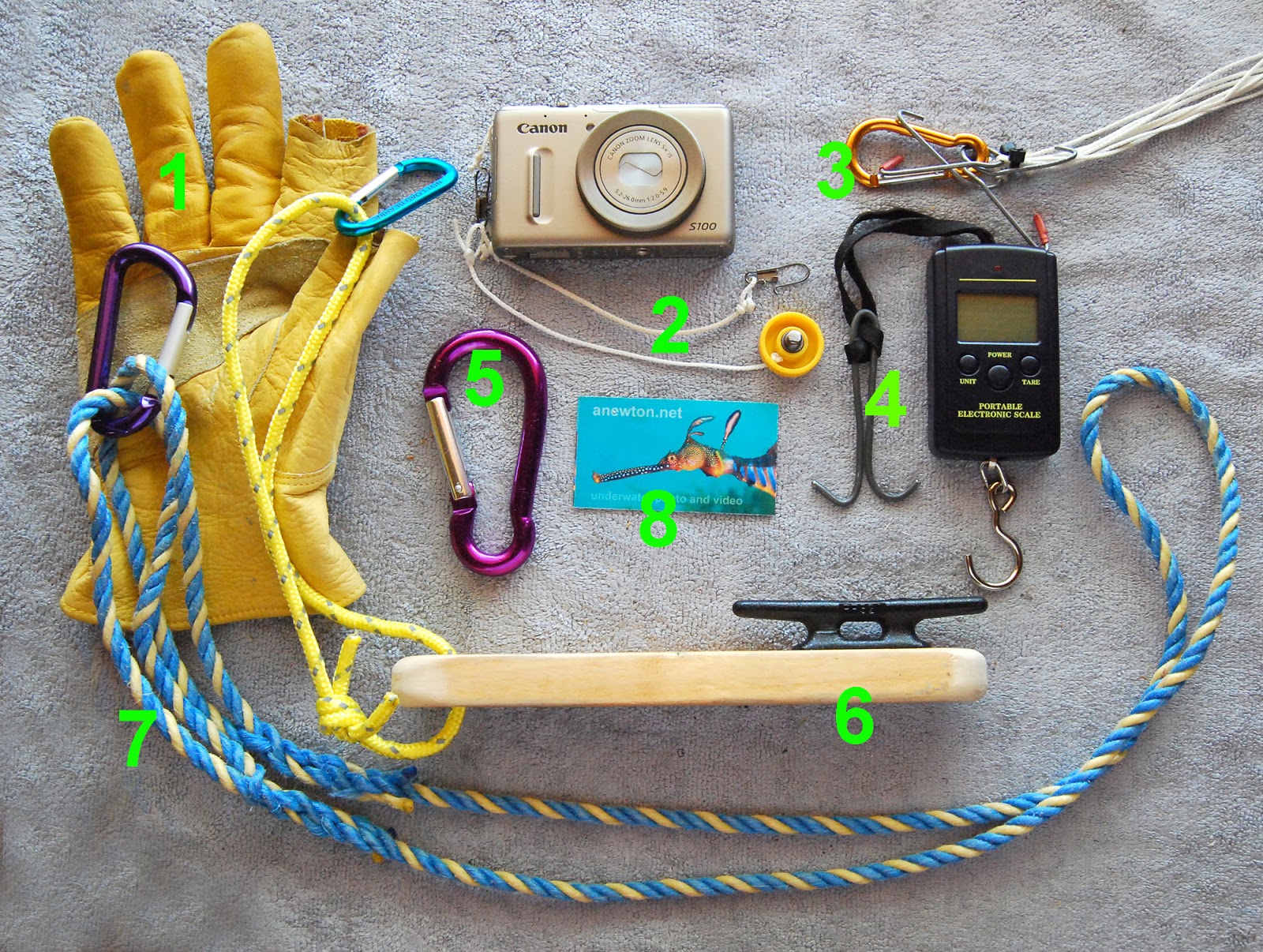 1. Leather gloves for the dominant hand with pointer finger and thumb tips cut off.

